
Get in Touch
- Phone
+91 700 752 2813
- Email Now
hello@wizweb.in
Office No - 204 A-140, Sector 63 Road Noida, Uttar Pradesh 201301
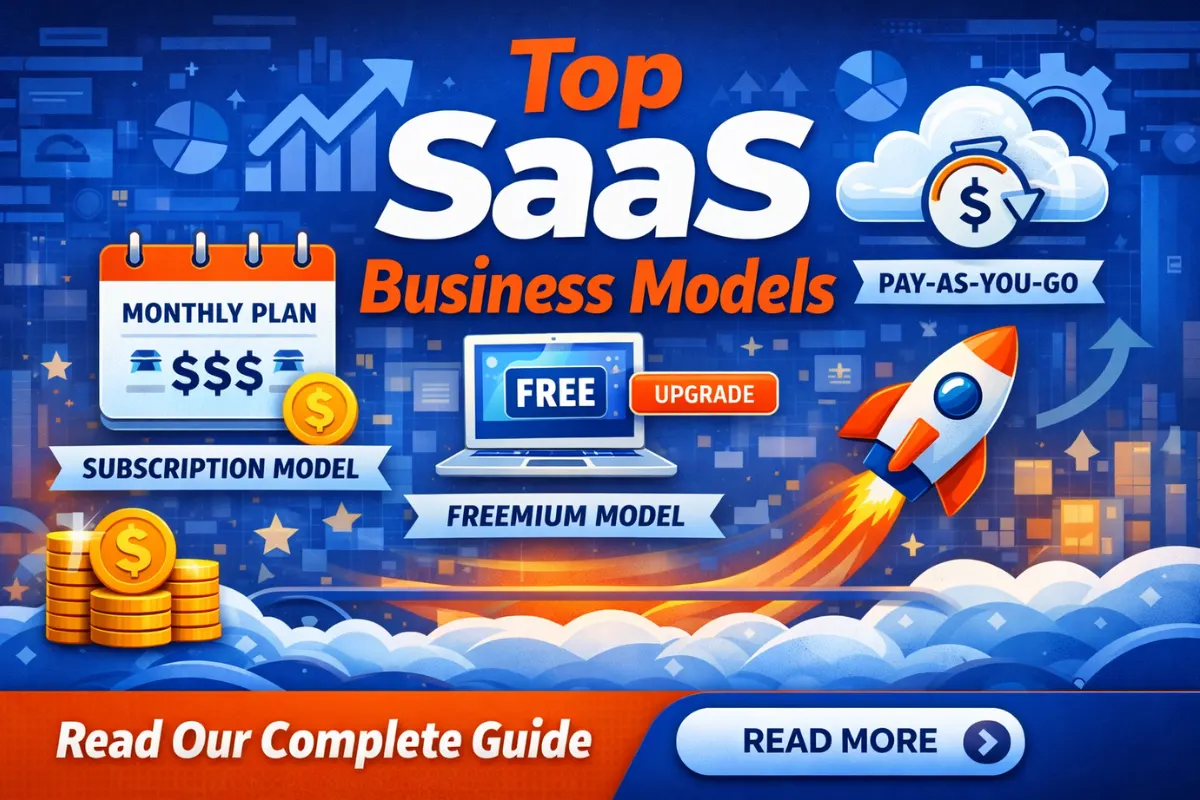

SaaS Business Models are the backbone of modern software startups. In 2026, choosing the right SaaS Business Models can make the difference between steady growth and getting stuck. This article breaks down the most popular and practical SaaS Business Models so beginners can understand which path fits their product, market, and goals. Whether you’re building a small productivity tool or a B2B platform, knowing these models helps you set pricing, plan marketing, and predict revenue. Read on for clear examples, benefits, common mistakes, expert tips, and a helpful FAQ to get your saas business on the right track.
Choosing the right SaaS Business Models shapes how you charge customers, scale, and support users. A good model helps with predictable revenue, easier forecasting, and stronger customer relationships.
Startups that pick the right saas model early can focus on growth metrics instead of constantly changing strategy. The wrong model can confuse customers and slow growth.
Here are the main SaaS Business Models every startup should know. Each one fits different user needs and markets.
This is the classic SaaS Business Models approach. Users pay a recurring fee — monthly or yearly — for access. It’s great for predictable revenue and customer retention.
Why startups use it: predictable income, easier forecasting, simplified billing.
Offer a free basic tier and charge for premium features. Many startups use the freemium saas model to grow users quickly.
Best for: consumer tools and early-stage products that need adoption.
Customers pay based on how much they use the product (API calls, seats, storage). This saas business approach works well for scalable services.
Good for: infrastructure, API platforms, and cloud services.
Create clear packages (Basic, Pro, Enterprise). Each tier adds more features or capacity. This saas model helps target different buyer personas.
Tip: keep tiers simple — 3 levels often work best.
Charge based on the number of active users or seats. Many B2B saas business products use this model.
Watch out for: price resistance as teams grow — consider volume discounts.
Combine models (freemium + subscription, or subscription + usage). Hybrid SaaS Business Models can capture wider markets while optimizing revenue.
Q1: What is the best SaaS Business Models for startups?
A1: There’s no single best model. For many startups, subscription or freemium models are easiest to start with because they offer predictable growth and user acquisition.
Q2: How does a freemium saas business make money?
A2: Freemium converts a small percent of free users into paid users. It also helps with upsells and paid features for power users.
Q3: Is pay-as-you-go better than subscription?
A3: It depends. Usage-based models are great when customers’ usage varies. Subscriptions are better for predictable, stable pricing.
Q4: Can I switch my saas model later?
A4: Yes. Many companies adjust pricing and models as they learn more about their market. Communicate changes clearly to existing customers.
Q5: How do I reduce churn in a saas business?
A5: Improve onboarding, offer great support, gather feedback, and release features that increase user value.
Q6: What metrics should I track for my saas business?
A6: Track MRR (Monthly Recurring Revenue), ARR (Annual Recurring Revenue), churn rate, LTV (Lifetime Value), and CAC (Customer Acquisition Cost).
SaaS Business Models are not one-size-fits-all. In 2026, startups should choose a model that fits their product, customers, and long-term plans. Start simple, measure fast, and be ready to iterate. Whether you pick subscription, freemium, usage-based, or a hybrid saas model, focus on delivering clear value and a smooth user experience. Want help building or refining your product?