
Get in Touch
- Phone
+91 700 752 2813
- Email Now
hello@wizweb.in
Office No - 204 A-140, Sector 63 Road Noida, Uttar Pradesh 201301
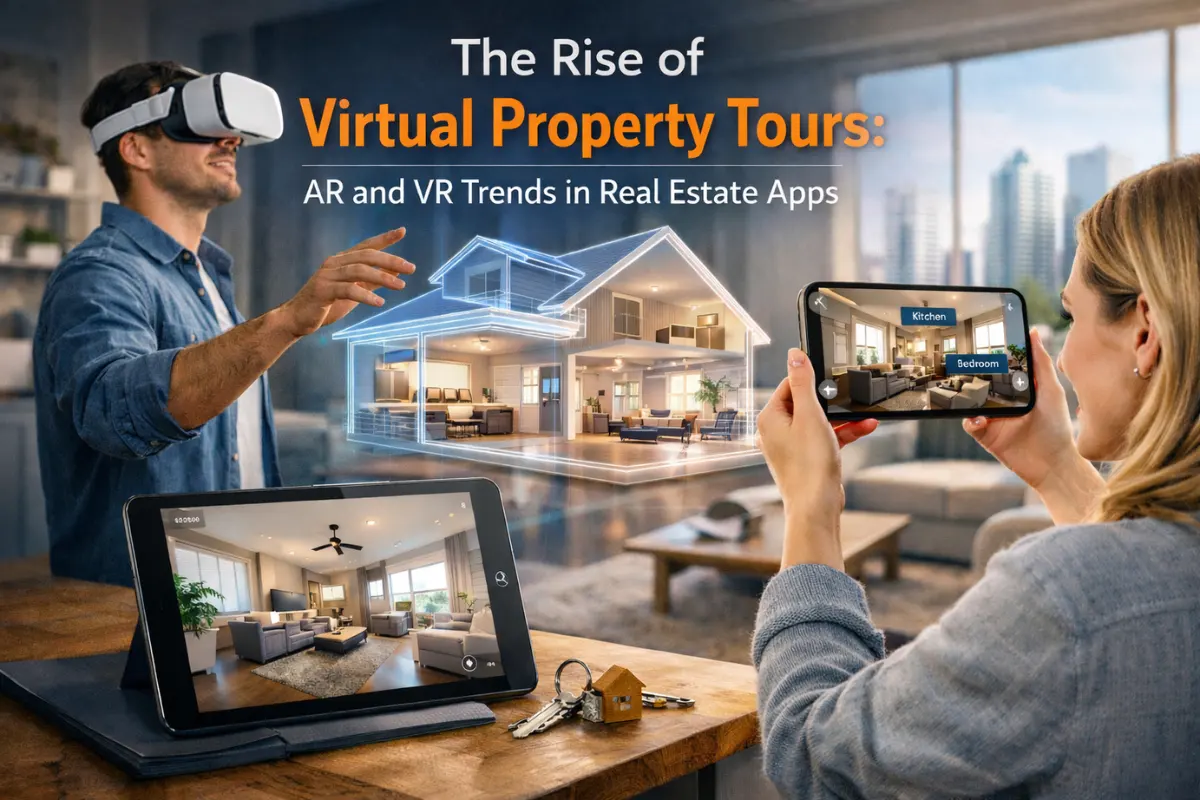

If you have looked for a home recently, you may have noticed one thing: you can now walk through many houses from your phone or laptop. Virtual property tours are changing how people buy, rent, and sell homes. Today, many Real Estate Apps put virtual tours on the front page because buyers want fast, clear, and real-feeling views of a property.
Virtual property tours let people explore a home online using virtual reality (VR), augmented reality (AR), or 360° photos. VR gives a fully immersive feel — you move around a room like you are there. AR places furniture, colors, or measurements over a live camera view so you can imagine how the space might look. Good Real Estate Apps mix both so users can try different views on phones, tablets, or headsets.
There are simple reasons: convenience, cost savings, and wider reach. Buyers can narrow their choices without traveling. Sellers get more people looking at listings without many in-person visits. Agents save time and spend more on the listings that matter. The market for virtual tours and immersive tech is growing quickly as businesses and portals add these tools to their services.
Big companies are showing how important this shift is. For example, CoStar Group announced a deal to buy Matterport, a leading company for 3D and virtual tours. That move shows how real estate platforms want to make immersive tours a normal part of buying and selling.
For buyers, virtual tours save time and help them feel sure about a home before they visit. For sellers, virtual tours bring more attention and better-qualified visitors. For agents, virtual tours help explain a home’s story — a staged, guided, or live virtual tour can show how a space feels. Surveys and industry pages show that many buyers now expect tours to be part of listings.
Matterport often tops the lists because it creates detailed 3D “digital twins.” Other tools and web editors let agents make 360° views by phone or camera, add hotspots, and share analytics. If you look for the best real estate app, focus on support for high-quality virtual tours, easy sharing, and simple analytics so you can see how many people view your listing.
If you are building a property app or hiring developers, these practical points matter: choose a good capture method (smartphone scan or special camera), use a fast host so tours load quickly, add interactive features like floor plans and contact buttons, and make the design work well on mobile. Working with reliable App Development Services can speed up these choices and connect the tours to your CRM and listing systems.
Creating high-quality tours needs an investment in cameras, software, and hosting. But the return often shows up as faster sales, fewer wasted visits, and better online visibility. The technology has become valuable enough that big companies are buying or partnering with virtual-tour firms to add these features to their portals.
There is also a human side to virtual tours. A good tour helps a buyer imagine living in the space. When people can walk around, see light at different times, and test furniture in AR, they form an emotional link to the place sooner. Agents who tell a short story — add voice notes, staging options, or a live walkthrough — often get better interest. For those reasons, choosing the best real estate app or hiring strong App Development Services matters.
Expect better mobile AR that does not need extra hardware, AI that clips the best moments of a tour for social media, and live virtual open houses where buyers can ask questions in real time. These changes will make Real Estate Apps more social, more useful, and more direct for transactions.
If you need help, good App Development Services or a carefully chosen best real estate app can handle the heavy work for you.